



Artificial intelligence has become a driving force behind how modern businesses plan strategies, execute campaigns, and communicate ideas. One of the most significant shifts in this space is the rise of AI content creators, tools capable of producing articles, visuals, videos, and marketing assets at unprecedented speed.
As content marketing becomes more competitive, brands are increasingly turning to AI to publish faster, scale efficiently, and engage audiences more effectively. From blog posts and ad copy to social media updates and email campaigns, AI-powered tools are redefining how stories are told online.
In this article, we’ll explore how artificial intelligence is revolutionizing content marketing, the benefits it brings, the challenges it introduces, and what the future holds for businesses that embrace AI-driven creativity.
What Are AI Content Creators?
AI content creators are software tools that use artificial intelligence to assist individuals and businesses in producing digital content. These tools rely on natural language processing (NLP) and machine learning (ML) to generate human-like text, images, and videos.
- NLP enables AI to understand and interpret language.
- Machine learning allows systems to improve content quality over time by learning from large datasets.
Because of this, AI tools can generate large volumes of content quickly, making them especially valuable in today’s fast-moving digital economy.
Popular AI Content Creation Tools
Several AI platforms are widely used in content marketing:
- ChatGPT
A leading AI chatbot used to generate blog posts, customer responses, FAQs, and social media content. With minimal human input, it can produce long-form and short-form content tailored to specific prompts. Research shows that nearly 49% of companies now use ChatGPT in some capacity. - Jasper
Known for creating persuasive, brand-focused content, Jasper is commonly used for blog writing, email campaigns, ad copy, and product descriptions. - Copy.ai
Designed primarily for short-form content, Copy.ai offers ready-made templates for ads, captions, and marketing snippets, making content creation faster and more accessible. - Undetectable.ai
This tool rewrites AI-generated content to sound more human and bypass AI detection systems. It also includes an AI detector and supports outputs from major models like ChatGPT, Gemini, Claude, and LLaMA, helping writers and marketers refine content authenticity.
The Role of Artificial Intelligence in Content Marketing
Artificial intelligence is transforming content marketing primarily through automation and intelligence-driven insights.
AI tools can automate repetitive writing tasks, allowing marketers to generate articles, social media posts, and promotional content in minutes rather than hours. Platforms such as ChatGPT, Google Gemini, and Perplexity significantly reduce content production time while maintaining acceptable quality.
Beyond creation, AI also supports content strategy development. By analyzing large datasets, AI can identify trending topics, high-performing formats, and audience preferences. When paired with targeted services, such as Amazon PPC campaigns, these insights help businesses create content and ads that convert more efficiently and at a lower cost.
The Benefits of AI in Content Marketing
AI offers multiple advantages that streamline workflows and improve marketing efficiency.
1. Speed and Efficiency
AI tools can generate high-quality drafts in minutes, allowing businesses to meet tight deadlines and maintain consistent publishing schedules without burnout.
2. Cost-Effectiveness
By reducing dependence on large content teams, AI helps businesses lower production costs while scaling output, making content marketing more accessible to startups and small companies.
3. Personalization at Scale
AI can tailor content recommendations based on user behavior, preferences, and browsing history. This level of personalization increases engagement, relevance, and customer satisfaction.
4. Data-Driven Content Strategy
AI analyzes massive datasets to uncover audience interests and emerging trends. These insights enable marketers to make smarter decisions about what content to create and when to publish it.
5. Brand Consistency
AI tools can follow brand tone, style guidelines, and messaging frameworks, ensuring consistency across blog posts, emails, ads, and social media, strengthening brand trust and identity.
The Challenges of Using AI in Content Creation
Despite its benefits, AI content creation comes with notable limitations.
Lack of Human Creativity
AI excels at speed and structure but often lacks emotional depth, originality, and storytelling nuance. Human writers bring lived experience, empathy, and creativity that AI struggles to replicate.
Plagiarism and Ethical Risks
Because AI learns from existing data, it may produce content that closely resembles published material. This raises ethical and legal concerns, especially when originality is critical, such as in education or academic environments.
SEO and Content Quality Issues
AI-generated content can sometimes rely too heavily on keywords, leading to keyword stuffing and shallow writing. While search engines reward relevance and value, low-quality AI content may hurt rankings if not properly edited.
Over-Reliance on Automation
Brands that depend exclusively on AI risk losing their unique voice. Over-automated content often feels generic, making it harder to build meaningful connections with audiences.
Strengthening AI Visibility and the Modern Marketing Stack
As AI reshapes discovery, AI visibility has emerged as a new competitive frontier. Ranking on traditional search engines is no longer enough; brands must now be discoverable across AI models, recommendation systems, and autonomous marketing platforms.
Many companies are responding by building a GenAI visibility stack, a structured approach to making content machine-readable, context-rich, and trustworthy for large language models.
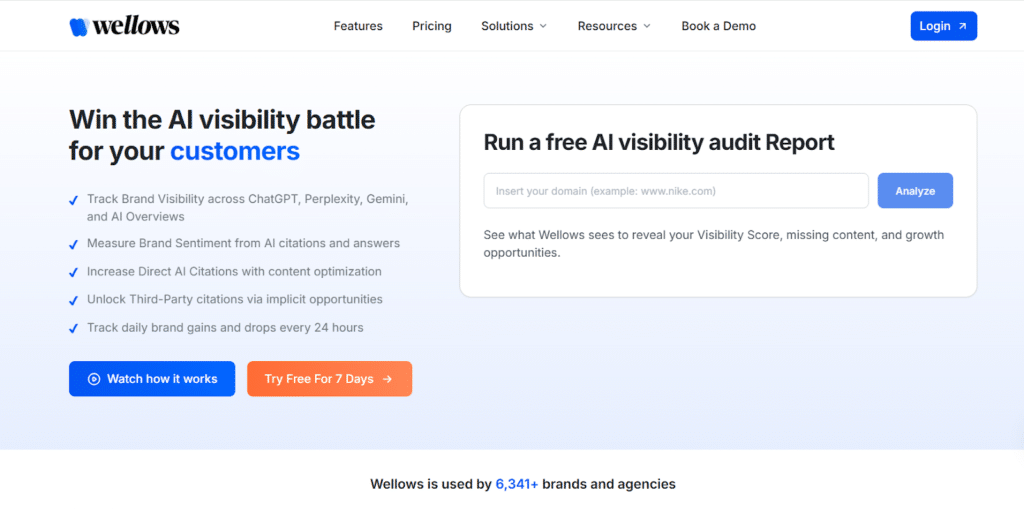
Platforms like Wellows focus on AI visibility, AI search presence, citation strength, and structured brand data within AI-driven environments. This mirrors how SEO once evolved for Google, except now the goal is to ensure AI systems accurately interpret, trust, and reference your brand.
AI and the Future of Content Marketing
AI’s role in content marketing will continue to grow. Future developments will likely include:
- More advanced creative capabilities
- Deeper personalization based on real-time user data
- Stronger integration between AI tools and marketing workflows
However, AI should enhance, not replace, human creativity. The most effective strategies use AI for research, data analysis, and drafting, while humans provide storytelling, emotion, and strategic insight.
Balancing automation with human input will define the next era of successful content marketing.
Closing Thoughts
AI content creators are reshaping the content marketing landscape by enabling faster production, greater scalability, and smarter personalization. These tools allow marketers to focus more on strategy and creativity while reducing manual effort.
That said, challenges such as originality, ethical risks, SEO quality, and brand authenticity must be carefully managed. The future of content marketing lies in a hybrid approach, where AI delivers efficiency and humans provide meaning.
By combining the strengths of both, businesses can create impactful, trustworthy, and engaging content that truly resonates with their audiences.
